
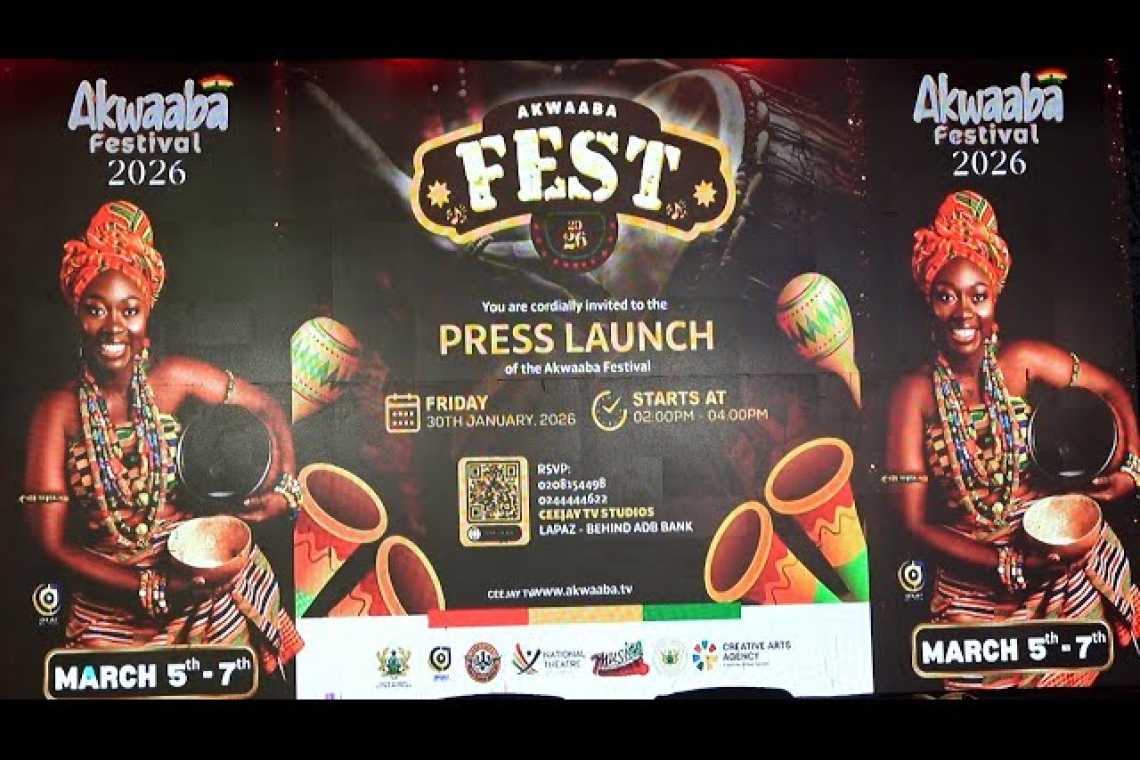
The fifth edition of the Akwaaba Festival has officially launched, set to transform the 2026 Independence season into a high-impact cultural and
commercial event. Scheduled for March 5–7, 2026, the festival moves to the National Theatre with a mandate to boost youth employment and national branding.
According to Dr. Geoffrey Tamakloe, Director of Tourism, this year’s edition is a critical pilot for two major government frameworks: the Black Star Experience and the 24-Hour Economy policy. The goal is to move beyond simple celebrations toward a round-the-clock economic model for the creative sector.
Aligning Culture with the 24-Hour Economy
The 2026 festival is being designed to prove the viability of 24/7 business operations in the tourism and hospitality sectors:
-
The Vibe Fair: A three-day open-air lifestyle market at the National Theatre forecourt featuring fashion, food, and "Made-in-Ghana" brands.
-
Continuous Operations: The festival encourages vendors and performers to leverage nightlife and extended hours to maximize revenue.
-
Youth Empowerment: By integrating with the 24-Hour Economy, the festival aims to create new shifts and roles in digital arts, hospitality, and event management.
-
The Black Star Experience: As a flagship branding pillar, the festival serves as a gateway for the global diaspora to engage with Ghanaian heritage.
Music and Creative Synergy
In a major collaboration with the Musicians Union of Ghana (MUSIGA), the festival is positioning itself as a talent incubator for artists across all 16 regions.
-
Akwaaba Experience Concert: A free independence concert at the National Theatre forecourt.
-
National Open Mic: A two-day showcase designed to help emerging musicians sharpen their craft and find professional "stepping stones."
-
Tribal Fashion Parade: A high-visibility runway event celebrating the diverse textiles and aesthetics of Ghana’s ethnic groups.
The Bottom Line
The Akwaaba Festival 2026 (March 5–7) will serve as a primary testing ground for the 24-Hour Economy in the tourism sector, using the National Theatre as a hub for round-the-clock creative and commercial activity.