
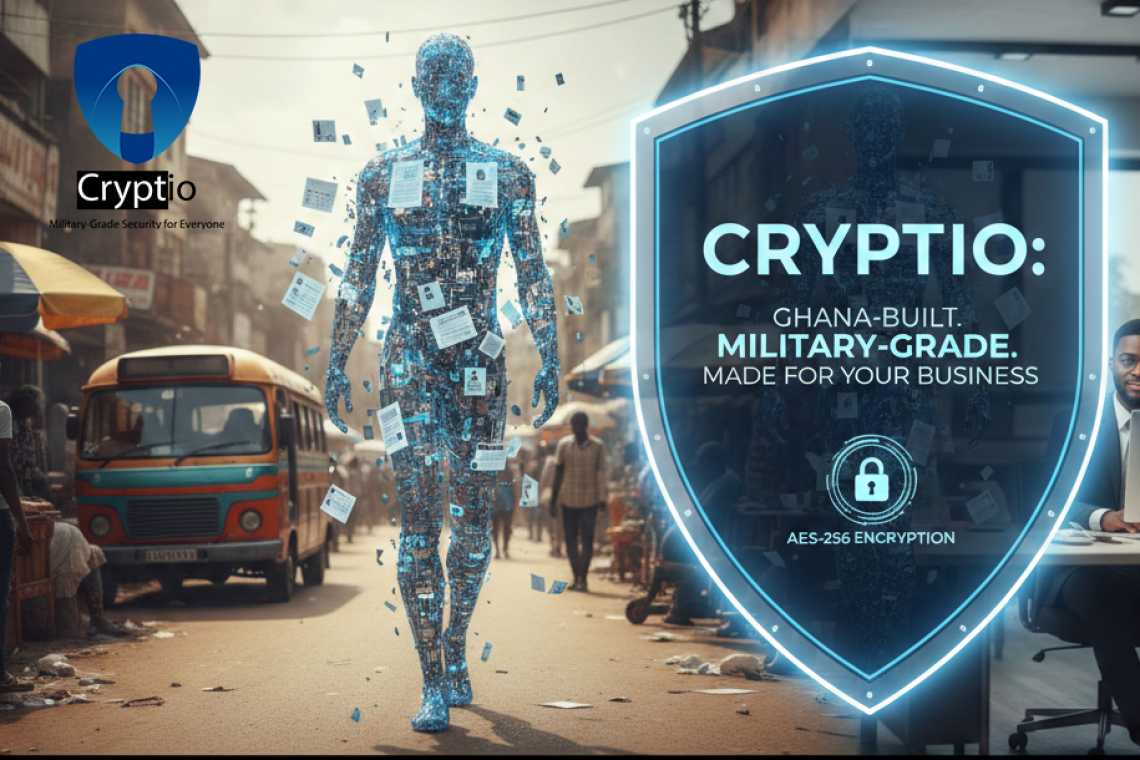
Let me paint you a picture.
It's a Tuesday afternoon in Osu. A chartered accountant just emailed a client's full financial records — name, TIN, bank statements, everything — using his regular Gmail account. No encryption. No password. Just a plain attachment flying through the internet like a trotro with no doors.
Three kilometres away, a young lawyer in Labone just saved confidential case files on a shared office laptop. The same laptop the receptionist uses to stream telenovelas at lunch. The same laptop that hasn't been updated since 2021.
This is not a hypothetical. This is Tuesday in Ghana.
The Problem Nobody Wants to Talk About
Ghana's Data Protection Act (Act 843) has been in force since 2012. That is over a decade. And yet, when you walk into most Ghanaian offices today and ask how client data is protected, you will hear one of three things:
"We use a password on our laptop."
"We trust our staff."
"We have antivirus."
With the greatest of respect — none of those are answers. They are wishful thinking dressed in IT language.
Studies consistently show that the majority of Ghanaian businesses — some estimates put it at 85% — do not meet the minimum standards required by the Data Protection Act. Not because the businesses are bad. But because the tools designed to help them comply were built for companies in London and New York, priced accordingly, and require IT departments that most Ghanaian SMEs simply do not have.
Enter Cryptio
Cryptio is Ghana's first military-grade encryption software, built specifically for the Ghanaian business environment by Transio Technologies. It protects your files and sensitive data using AES-256 encryption — the same standard used by governments, intelligence agencies, and the world's most secure institutions.
But here is what makes Cryptio different from every international solution you may have considered: it was designed with Ghana in mind. Not as an afterthought. Not with a 'localisation patch.' From the ground up.
It works offline. Because we know NEPA — sorry, ECG — has opinions about when your business gets to operate. It integrates with Mobile Money. Because that is how Ghanaian businesses actually move money. It does not require a dedicated IT team to set up or maintain.
What Happens When Data Gets Breached?
It is easy to think data breaches are a problem for Jumia and MTN — the big names with the big systems. But small business breaches are often more devastating precisely because there is no legal team, no PR budget, and no war chest to survive the fallout.
A client whose confidential medical history leaks from a small clinic does not become less angry because the clinic is small. A professional whose financial records are exposed does not reduce their lawsuit because the firm is a two-person outfit.
Under the Data Protection Act, individuals and organisations can face significant penalties for failing to protect personal data. And the reputational damage — the loss of client trust — can be far worse than any fine.
This Is Not Paranoia. This Is Business.
Protecting your data is not about being afraid. It is about being professional. When you hand a client your business card, you are making a promise — I am someone you can trust with your business. That promise extends to how you store their information.
Cryptio gives you the tools to keep that promise. At GH₵300 per month — less than what most offices spend on printer paper — you can have enterprise-grade security that meets regulatory requirements and tells every client who walks through your door: your information is safe with us.
Your competitors are not thinking about this yet. That is your advantage.
Cryptio: Ghana-built. Military-grade. Made for your business.