
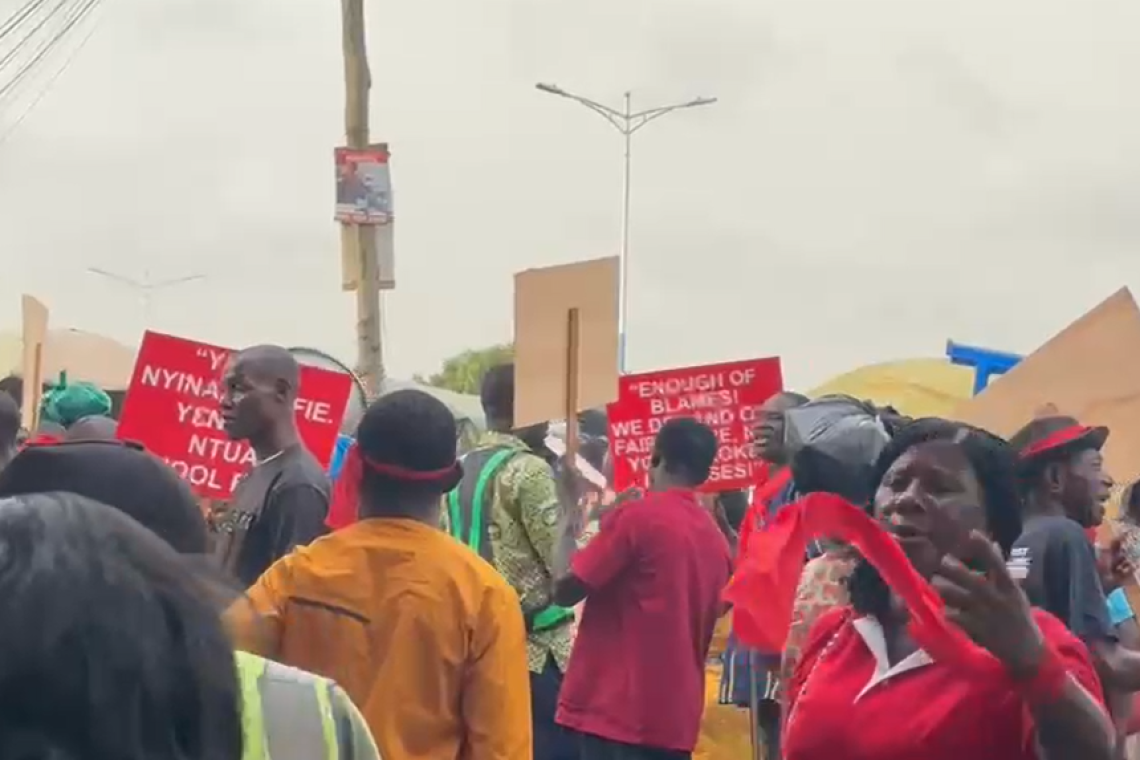
The capital was awash in the colors of mourning and anger today as hundreds of cocoa farmers descended on the Ghana Cocoa Board (COCOBOD) headquarters. The picketing, which
began at dawn, is a desperate outcry against a sudden 29% reduction in the cocoa producer price and chronic delays in payments that farmers say have left their families in "economic ruin."
Chanting slogans and brandishing placards with messages like “We worked, you lied” and “Government celebrates but our families mourn,” the protesters have vowed not to leave until they receive a commitment for a price reversal and the immediate settlement of outstanding arrears.
1. The Math of the Crisis: Why Farmers are Protesting
On February 12, 2026, the government announced a "price reset" for the remainder of the 2025/26 season. While the administration frames it as a "fiscal necessity," for the farmer, it is a massive loss of income.
| Metric | Previous Price (Oct 2025) | New Price (Feb 2026) | The "Haircut" |
| Price per Bag (64kg) | GH₵3,625 | GH₵2,587 | -GH₵1,038 (28.6%) |
| Price per Tonne | GH₵58,000 | GH₵41,392 | -GH₵16,608 |
The Grievances:
-
Unpaid Arrears: Many farmers at the protest reported they have not been paid for beans delivered as far back as November 2025.
-
Educational Crisis: With the new semester underway, parents stated they are unable to pay school fees for their children.
-
Input Costs: Despite the price drop, the cost of fertilizers and labor has remained high, making it nearly impossible to maintain farms for the next season.
2. The Government’s Defense: "World Market Realities"
Finance Minister Dr. Cassiel Ato Forson and COCOBOD leadership have argued that the reduction was unavoidable. According to the Ministry:
-
Global Collapse: The world market price of cocoa has plunged from an average of $7,200 to $4,100 per tonne since October 2025.
-
Sustainability: At the previous price of GH₵3,625 per bag, Ghana’s cocoa was being sold at a loss, threatening to bankrupt COCOBOD.
-
Shared Sacrifice: To appease public anger, COCOBOD executives have taken a 20% salary cut, and senior staff a 10% cut, as part of a broader cost-cutting drive.
"We depend entirely on cocoa. When payments delay or prices drop, our families suffer. We are the backbone of this country, but we are being treated like the tail." — A protesting farmer from Western North.
3. The Smuggling and Quality Risk
Industry experts warn that the 2026 "price reset" could have unintended consequences for the national economy:
-
Smuggling: If prices in neighboring Côte d'Ivoire remain higher, Ghanaian beans may leak across the border.
-
Galamsey Temptation: There are growing fears that frustrated farmers may lease their land to illegal miners (Galamsey) for immediate cash, permanently destroying cocoa-growing soil.
-
Production Slump: Without funds for maintenance, Ghana’s output (already struggling with swollen shoot disease) could see a sharp decline in the 2026/27 season.
The Bottom Line
The standoff at COCOBOD headquarters is the most significant labor unrest of 2026 so far. While the government points to the "global market" as the culprit, the farmers point to "broken promises" from the 2024 campaign. As the March 3 by-elections and the 2026 State of the Nation Address approach, the "Cocoa Crisis" has become the primary political and economic challenge for the Mahama administration.