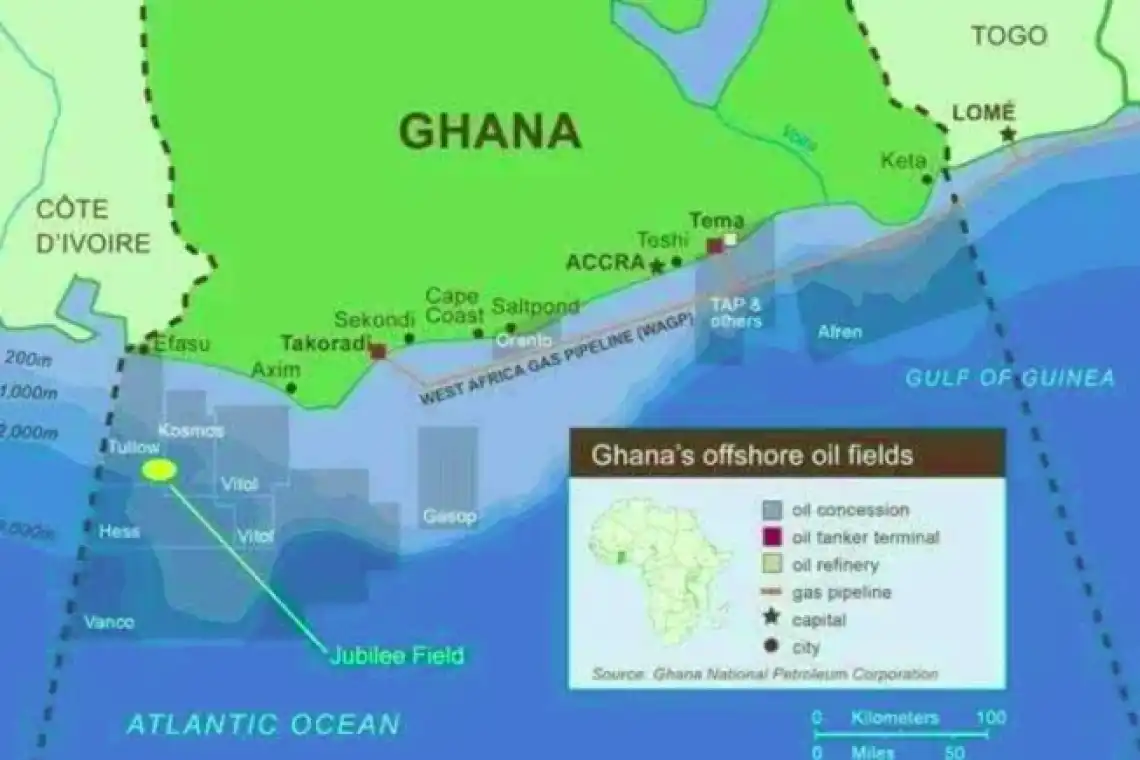
After nearly a decade of quiet diplomacy and technical committee meetings, the government of Ghana has officially escalated its maritime boundary dispute with Togo. In a press
statement issued today, Mr. Felix Kwakye Ofosu, Spokesperson to the President and Minister of Government Communications, announced that Ghana has served formal notice to Togo of its intent to seek a final resolution through international arbitration.
The move is framed not as an act of hostility, but as a necessary legal step to protect national resources and prevent an "escalation of incidents" between the security and petroleum institutions of the two neighboring states.
1. The Eight-Year Impasse (2018–2026)
The decision to trigger the United Nations Convention on the Law of the Sea (UNCLOS) follow-up follows a series of failed negotiations that began in earnest in 2018.
Why Negotiations Failed:
-
Conflicting Principles: Ghana argues for the Equidistance Principle (a boundary exactly halfway between the two coasts), while Togo seeks adjustments based on historical and geographical "special circumstances."
-
Resource Flashpoints: The dispute intensified following significant oil and gas discoveries in Ghana's eastern basins. Between 2017 and 2018, Togolese authorities famously intercepted two Ghanaian seismic vessels, halting data collection in contested deep-sea blocks.
-
Institutional Tensions: Unresolved boundaries have led to friction between the navies and petroleum commissions of both countries, creating what the government calls "unsatisfactory" operational risks for investors.
2. The Legal "Reset": How Arbitration Works
By opting for arbitration under UNCLOS Annex VII, Ghana is essentially asking for a binding "divorce settlement" for their shared waters. This process is strikingly similar to the Ghana vs. Côte d’Ivoire case (2014–2017), which Ghana won.
The Arbitral Process:
-
Notice of Arbitration: Today’s formal notice to Togo.
-
Constitution of the Tribunal: Five arbitrators will be chosen—one by Ghana, one by Togo, and three neutral members.
-
Written & Oral Pleadings: Both nations will present evidence, including colonial-era maps and geological data.
-
The Binding Award: A final, non-appealable boundary line is drawn.
3. The Economic Stake: Oil, Gas, and Fisheries
For both Accra and Lomé, the stakes are measured in billions of dollars. The disputed area overlaps with some of the most promising unexplored hydrocarbon blocks in the Gulf of Guinea.
-
For Ghana: A win secures the eastern frontier for the Keta Basin exploration projects.
-
For Togo: A boundary adjustment would expand their maritime territory, which is currently "wedged" between larger neighbors.
-
For ECOWAS: A peaceful resolution strengthens the Yaoundé Architecture for maritime security in West Africa.
4. Maintaining "Good Neighborliness"
Despite the legal move, Mr. Kwakye Ofosu emphasized that Ghana and Togo remain brothers within ECOWAS. The use of a "neutral and structured mechanism" like arbitration is intended to remove the emotional and political heat from the border, allowing the two leaders—President John Dramani Mahama and President Faure Gnassingbé—to maintain strong diplomatic ties elsewhere.
The Bottom Line
Ghana is doubling down on international law. Just as it did with its western neighbor a decade ago, the country is betting that a "rules-based" boundary is the best way to ensure the sustainable extraction of offshore wealth and long-term peace with its eastern neighbor.