
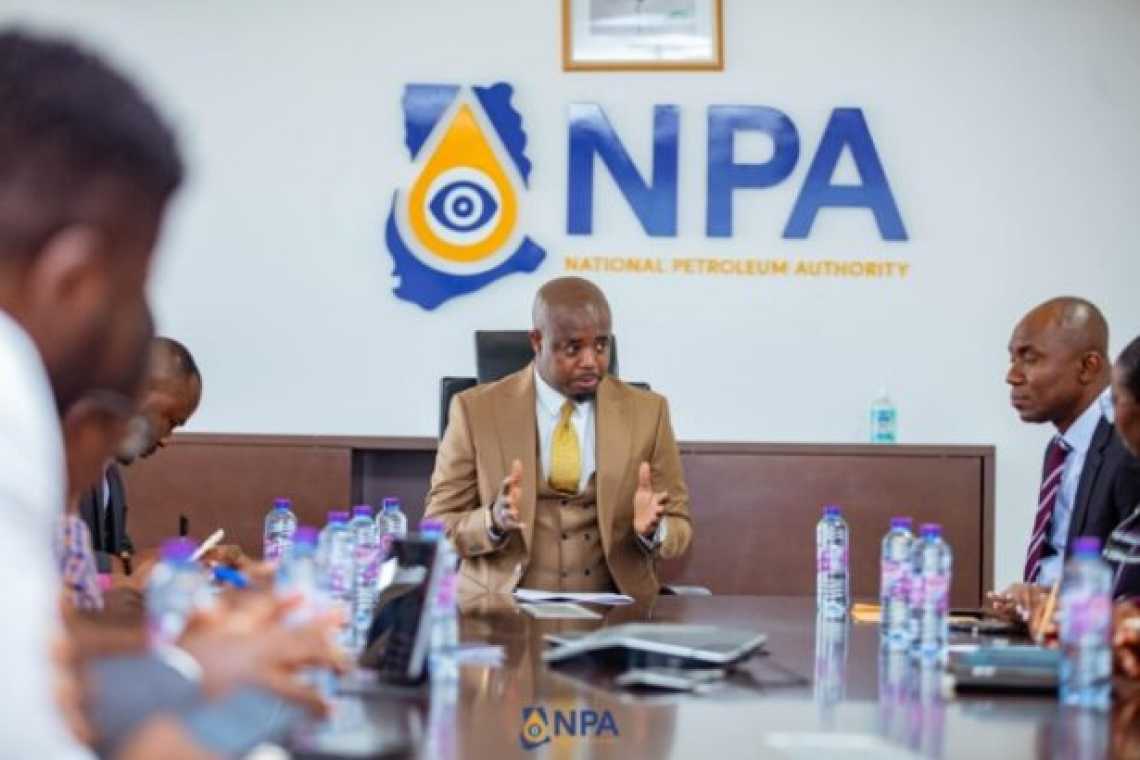
Despite the escalating geopolitical tensions in the Middle East and a sharp rise in global crude prices, the National Petroleum Authority (NPA) has moved to calm domestic fears,
confirming that Ghana currently holds robust fuel stocks.
Speaking on JoyNews on Sunday, March 1, Mr. Abass Ibrahim Tasunti, Director of Economic Regulation and Planning at the NPA, revealed that the country’s "strategic buffer" is well above emergency levels, even as the Strait of Hormuz remains a flashpoint for global supply chains.
1. The Numbers: 5+ Weeks of Energy Security
Mr. Tasunti dismissed rumors of a knee-jerk reaction to the "Hormuz War," emphasizing that these stock levels are part of the NPA’s routine mandate to prevent "no-fuel" scenarios.
Current Stock Breakdown (as of Feb 27, 2026):
-
Petrol (PMS): Approximately 6.8 weeks of supply.
-
Diesel (AGO): Approximately 5.3 weeks of supply.
-
In-Bound Logistics: Four vessels (2 Petrol, 2 Diesel) are currently at the Tema anchorage awaiting discharge, with more scheduled throughout March.
2. The "Domestic Shield": Sentuo and Atuabo
A critical part of Ghana's 2026 energy resilience is the increased contribution of local refining and processing.
-
Sentuo Oil Refinery: Has been consistently supplying the market since June 2025, significantly reducing the immediate pressure on imported refined products.
-
Atuabo Gas Processing Plant: Continues to lead the distribution of Liquefied Petroleum Gas (LPG), ensuring domestic energy for homes remains stable.
3. The Pricing Threat: The "$91 Barrel" Reality
While supply is secure, pricing remains the primary concern for Ghanaian consumers. Global crude prices have surged past $91 per barrel due to the risk premium associated with the Middle East hostilities.
COPEC’s Warning:
The Executive Secretary of the Chamber of Petroleum Consumers (COPEC), Mr. Duncan Amoah, warned that the "Strait of Hormuz" factor is already being priced into future cargoes.
"Traders are factoring in geopolitical risks. If I have to put stock on the market tomorrow, I must bear in mind that the next consignment could be significantly more expensive due to these tensions." — Duncan Amoah, COPEC
4. Strategic Outlook: Navigating the Strait of Hormuz
The Strait of Hormuz is the world's most important oil transit chokepoint. Any prolonged disruption there directly affects Ghana as a net importer of refined petroleum.
| Risk Factor | Impact on Ghana | NPA/COPEC Stance |
| Supply Disruption | Potential shortages | Low Risk: Strong reserves + Sentuo production. |
| Price Volatility | Higher pump prices | High Risk: Global crude > $91/barrel. |
| Shipping Costs | Increased insurance/freight | Moderate Risk: Reflected in next pricing window. |
The Bottom Line
Ghana’s "Energy Reset" is facing its first major geopolitical test of 2026. While the NPA has successfully built a 6-week safety net, the "Hormuz surcharge" at the pumps appears inevitable. As the next pricing window approaches on March 16, motorists should prepare for potential upward adjustments driven by the $91 global crude benchmark.