
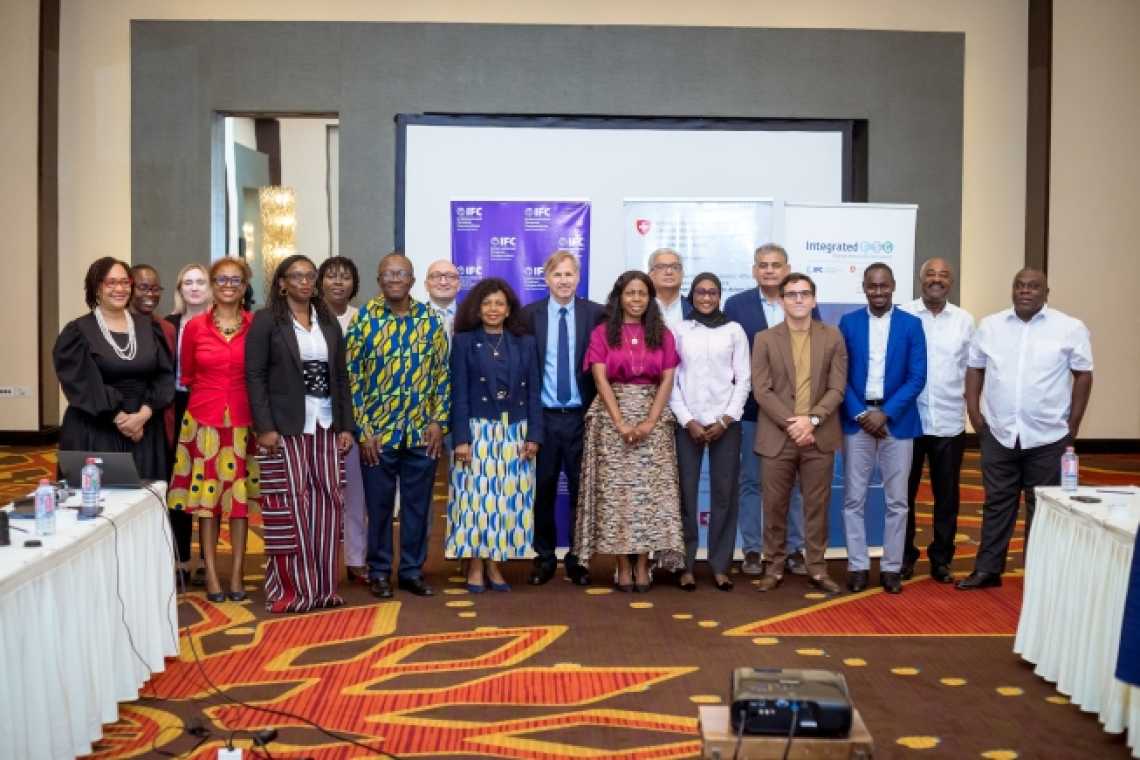
At the recent workshop in Accra themed "Passing the Baton, Preserving Purpose: Managing Generational Transitions," the International Finance
Corporation (IFC) emphasized that family-owned enterprises account for over two-thirds of Ghana's private businesses.
Despite their dominance, they face a critical "survival gap." According to IFC and PwC data, only 30% of family businesses globally make it to the second generation, and less than 10% reach the third. In Ghana, this trend is often exacerbated by a heavy reliance on the founder and the absence of formal succession plans.
The "90% Job Creation" Factor
Mr. Kelhofer highlighted that the private sector is responsible for 90% of job creation in Ghana. Therefore, the failure of a single large family conglomerate doesn't just affect one family; it threatens thousands of livelihoods and disrupts national supply chains.
Strategic Benefits of Sound Governance
Adopting international best practices is no longer just about "family peace"—it is a competitive business advantage. The IFC outlined three primary reasons why Ghanaian family firms must formalize:
-
Access to Finance: Banks and private equity firms (including the IFC) now use governance as a key metric for creditworthiness. Firms with clear succession plans attract capital more easily.
-
Operational Stability: Clarifying the roles of family members vs. professional managers reduces conflict and speeds up decision-making.
-
Global Ambition: Many Ghanaian family firms have the potential to become regional "champions" across West Africa, but only if they transition from "founder-led" to "system-led" entities.
Practical Tools for Succession
The workshop introduced participants to the Family Constitution—a guiding (though non-binding) document that serves as a blueprint for:
-
Defining ownership and inheritance rights.
-
Setting rules for next-generation entry into the business.
-
Establishing dispute resolution mechanisms to prevent litigation.
| Governance Level | Key Focus | Output |
| Family Level | Harmony & Values | Family Council / Constitution |
| Ownership Level | Wealth & Equity | Shareholders' Agreement |
| Business Level | Performance & Profit | Professional Board of Directors |
The Bottom Line
The IFC, supported by Switzerland (SECO), is doubling down on its commitment to Ghanaian corporates. By moving from "crisis management" to "generational planning," Ghana’s family businesses can transform from local shops into durable, cross-sector giants. As Kelhofer noted, "These are not just businesses; they are legacies."