
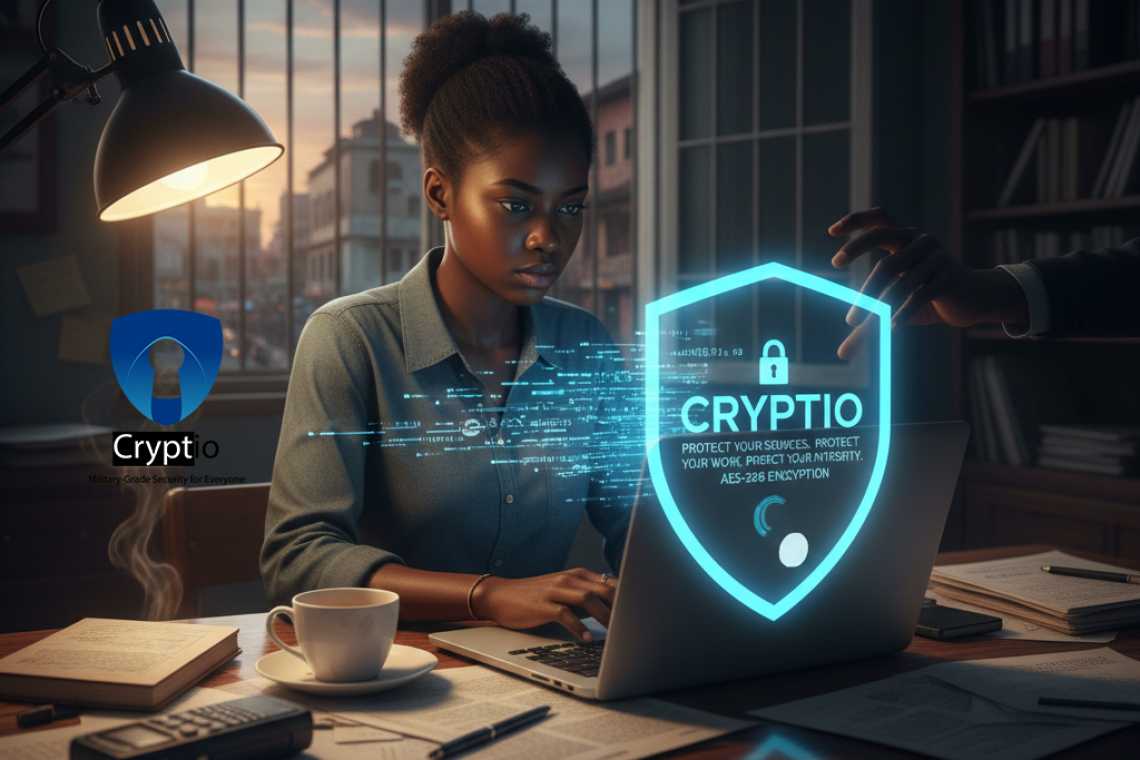
In 2023, an investigative journalist in West Africa spent eight months building a story. Sources. Documents. Recorded conversations. A story that could change things.
Then their laptop was seized.
Everything — every source's identity, every document, every note — was exposed in minutes. Not because of some sophisticated cyber attack. Because the files were not encrypted. Because there was no protection layer between a determined adversary and eight months of sensitive work.
The story never ran. The sources were put at risk. And the journalist learned the lesson every reporter should learn before something like this happens to them.
Journalism in Ghana Is Under-Protected
Let us be direct: journalists in Ghana are doing increasingly important work. Investigative reporting on corruption, illegal mining, public health failures — this is the work that democracies need. And it is exactly the kind of work that puts reporters at risk.
But most journalists in Ghana — especially freelancers and those working for smaller outlets — have zero digital security infrastructure. They communicate through regular WhatsApp. They store sources on their personal phones. They back up documents to Google Drive accounts without two-factor authentication.
This is not recklessness. It is a resource problem. The digital security tools that newsrooms in the UK and US use cost money that most Ghanaian reporters simply do not have access to.
What Cryptio Gives a Journalist
Cryptio was designed with exactly this kind of professional in mind. Here is what it changes for journalists on the ground:
Source protection is non-negotiable in this work. When a source gives you documents — financial records, internal memos, evidence of wrongdoing — encrypting those files immediately means that even if your device is seized, the contents remain protected. Without the correct password, the data is mathematically unreadable. Not 'hard to read.' Unreadable.
Cryptio's patent-pending dual-password system adds another layer: you can configure a decoy password that opens a safe version of the application showing non-sensitive files, while the real data remains hidden. If you are ever pressured to 'show what is on your computer,' you have a professional, credible response that reveals nothing important.
Everything works offline. An investigative reporter in Tamale or Takoradi or deep in the Western Region does not need to rely on cloud connectivity to protect their work. Cryptio encrypts locally, so your protection exists whether you have network access or not.
The Human Rights Angle
Beyond journalists, consider every professional who works with vulnerable people: social workers documenting cases of abuse, NGO workers handling refugee information, healthcare workers in community clinics storing patient records on shared devices.
Every one of these people is a custodian of sensitive human information. Every one of them deserves tools designed to protect that information. Cryptio gives them exactly that.
You Cannot Report What You Cannot Protect
The best story in the world is worth nothing if pursuing it compromises your sources. The most important case files are worthless if they end up in the wrong hands. Digital security is not a luxury for journalists and human rights workers in Ghana — it is a professional and ethical obligation.
At GH₵300 per month, Cryptio is accessible. At AES-256 military-grade encryption, it is serious. And for the journalist who does not want to be the next cautionary tale — it is essential.
Learn more at www.getcryptio.com
Protect your sources. Protect your work. Protect your integrity. That is what Cryptio is built for.