
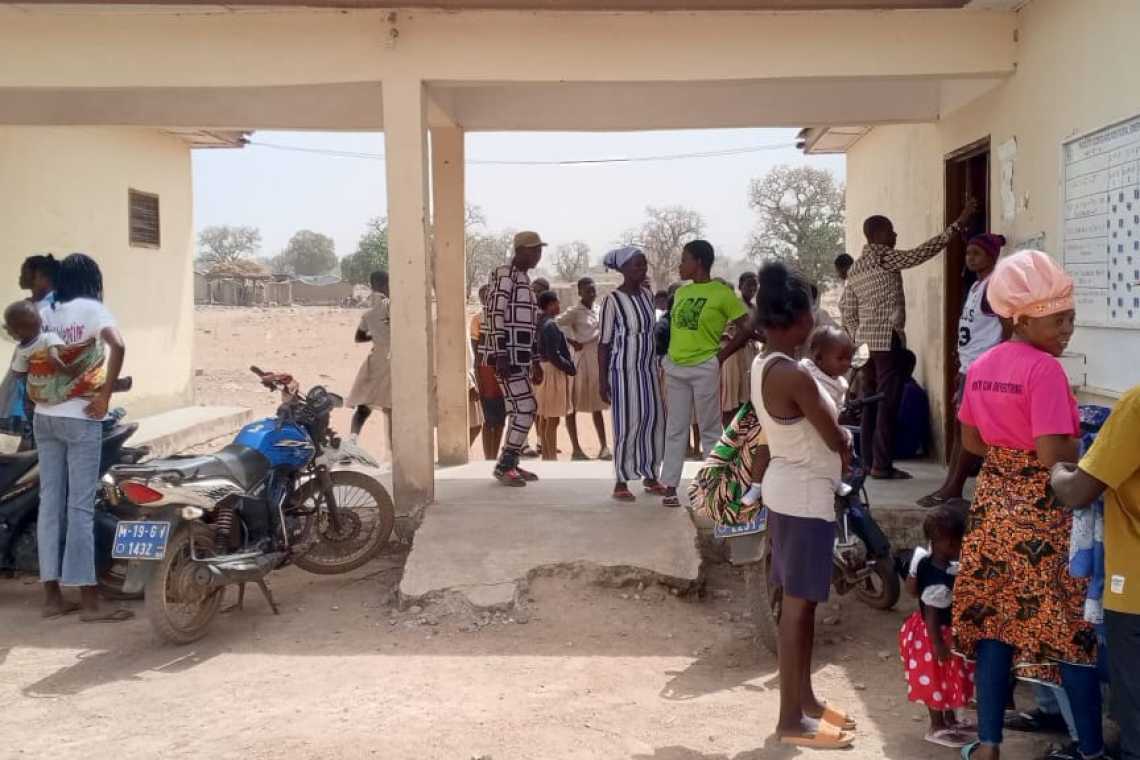
In a major push to close the healthcare gap in the Upper East Region, the Centre for Sustainable Development Initiatives (CENSUDI) has launched its Cervical Health Advocacy
(CenCerHeAd) project. The initiative kicked off with a free screening exercise for women and students at the Nyogbare CHPS Compound in the Nabdam District, aiming to tackle the "silent killer" of cervical cancer in underserved communities.
The project, a collaboration with the Bolgatanga Central Hospital and the Ghana Health Service (GHS), aims to elevate the region's screening rate as part of a grander vision to hit a 50% screening coverage by 2030.
1. The Screening Gap: National vs. Local
Despite cervical cancer being preventable, it remains the second leading cause of cancer-related deaths among Ghanaian women. The CenCerHeAd project is designed to address the stark disparity between national targets and the reality on the ground.
| Metric | Current Status (Ghana) | CENSUDI 2030 Goal |
| National Screening Rate | 16.8% | 50.0% |
| Primary Target Age | 25 – 65 years | 25 – 65 years |
| Nabdam District Status | < 90% HPV Vaccination Coverage | Target for increased advocacy |
2. Why Nabdam? The Post-Vaccination Strategy
CENSUDI President Mrs. Franciska Issaka revealed that Nabdam was strategically selected for the pilot because the district fell short of the 90% target during the government’s Human Papillomavirus (HPV) vaccination rollout in November 2025.
-
The Missing Group: 16-year-old student Belinda Sapak highlighted a critical gap: the 2025 rollout targeted only girls aged 9–14. Students aged 15 and above, like Belinda, are now looking to CENSUDI's screening programs as their primary line of defense.
-
Overcoming Distance: By bringing the screening to CHPS compounds in Nyogbare and Kotintabig, the project removes the barrier of long travel distances to Bolgatanga, which often deters women from seeking care.
3. A Survivor’s Advocacy
For Mrs. Issaka, the mission is personal. A survivor of both abnormal cervical cells (detected in 1989) and breast cancer, she describes herself as a "previvor"—someone who took action before the disease could progress.
"There is so much attention on breast cancer, but not enough on cervical cancer. Yet cervical cancer is preventable... With HPV vaccination and regular screening, we can eliminate it." — Mrs. Franciska Issaka
4. The "Silent Disease" Warning
Mr. Roger Tandanbil, an Oncology Nurse Specialist, warned that waiting for symptoms is a dangerous strategy. Early-stage cervical cancer is often asymptomatic, meaning by the time a woman feels pain or notices changes, the disease may already be advanced.
Barriers to Early Detection in Upper East:
-
Lack of Personnel: Inadequate trained oncology specialists in rural districts.
-
Financial Challenges: The cost of regular check-ups in private facilities.
-
Awareness: Low levels of information regarding the link between HPV and cancer.
5. Global Support for Local Impact
The CenCerHeAd project is fueled by a coalition of individual donors and organizations, including Beyond Boundaries-Syracuse, USA, and a long list of international supporters such as the Stecher, Saini, and Stanford families. This international backing ensures that the pilot can move from Nyogbare to other communities across the Upper East Region throughout 2026.
The Bottom Line
The CENSUDI outreach is more than a medical exercise; it is an empowerment tool. As beneficiaries like Agnes Baa and Layibil Yensogre return to their homes as "health ambassadors," they carry the message that early detection is the only way to "Reset" the narrative of cancer in Northern Ghana.