
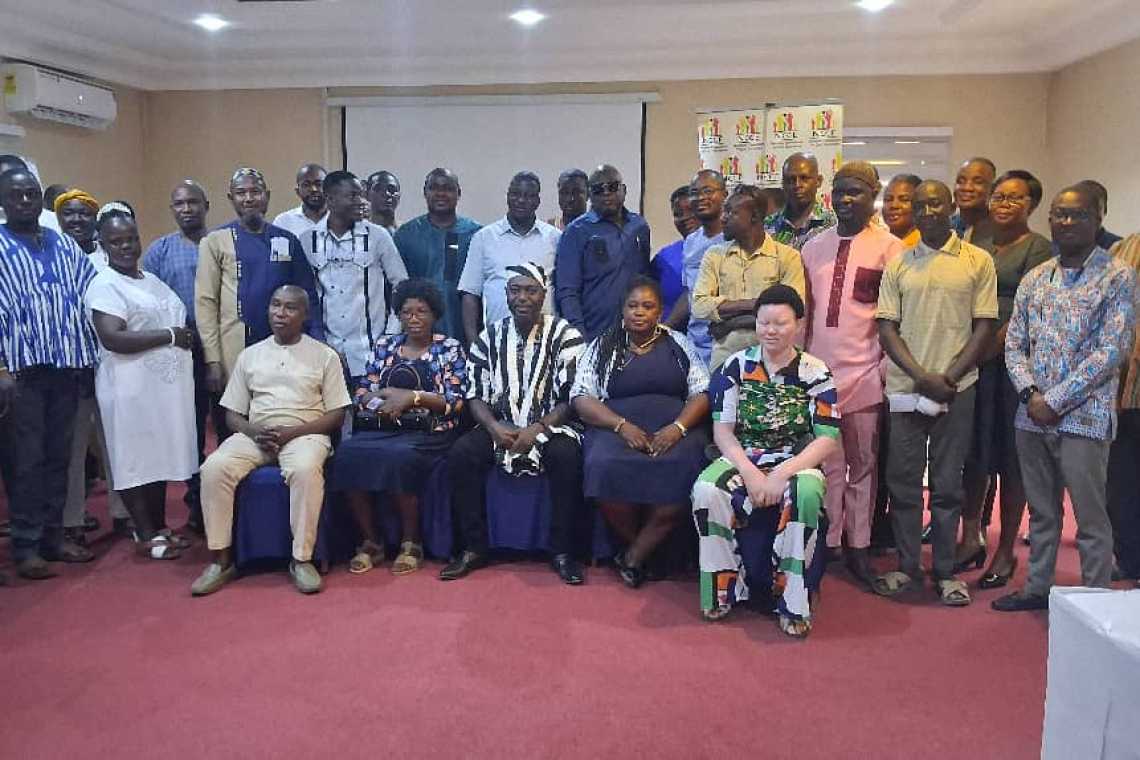
In what governance experts are calling a "crisis of democratic capture," a broad coalition of stakeholders has thrown its weight behind a proposed Model Political Finance Law aimed
at curbing the explosive rise of money in Ghanaian politics.
At a high-level forum in Bolgatanga, organized by the Center for Democratic Development (CDD-Ghana) and the National Commission for Civic Education (NCCE), participants warned that the current $100 million price tag for a presidential campaign is effectively "auctioning off" the nation’s democracy to the highest bidder.
1. The Staggering Cost of Power
Research presented by CDD-Ghana revealed a trend that threatens to make public office exclusive to the wealthy and "opaque financiers."
-
Presidential Run: Now estimated to cost roughly US$100 million.
-
Parliamentary Contests: Costs have increased by over 400% across three electoral cycles.
-
The Impact: Competent but less wealthy citizens—particularly women, youth, and persons with disabilities (PWDs)—are being systematically priced out of the democratic process.
2. Closing the "Individual Loophole"
A major revelation from the forum was the regulatory gap in existing laws. While Article 55 of the 1992 Constitution and the Political Parties Act regulate parties as entities, they are largely silent on individual candidates.
The "90% Disclosure" Crisis:
According to Mr. William Nyarko of ACILA, approximately 90% of campaign contributions are given directly to individual candidates rather than the party offices. Currently:
-
Candidates are not required to disclose private donations.
-
There are no legal limits on how much an individual can spend.
-
The "Campaign Period" is not legally defined, allowing for indefinite, high-cost campaigning.
3. The Proposed Model Law: A Four-Point "Reset"
The new model law developed by CDD-Ghana seeks to bridge these gaps with four primary pillars of reform:
| Reform Pillar | Proposed Action |
| Spending Caps | Setting a hard limit on total campaign expenditure for both Presidential and Parliamentary races. |
| Contribution Limits | Capping the amount any single individual or corporate entity can donate to a candidate. |
| Mandatory Disclosure | Requiring candidates to file public reports on all donations received, not just party-level funds. |
| Defined Campaign Period | Establishing a specific window for active campaigning to reduce the duration of high-spending activities. |
4. Protecting the "Supply and Demand" of Democracy
Mr. Augustine Akugri of the NCCE noted that the problem is twofold: the "supply" of money from candidates and the "demand" for money from voters. He warned that this culture undermines merit and turns elections into a financial transaction rather than a leadership choice.
"When public office goes to the highest bidder, we see the influence of financiers whose funding sources are often opaque. This is not just a regulatory issue; it is an existential threat to our country." — Mr. Jacob Tetteh Ahuno, CDD-Ghana
The Bottom Line
The Bolgatanga endorsement is a significant step toward the "Clean Politics" agenda for the 2026-2027 cycle. However, the path to passing this Model Political Finance Law in Parliament remains steep, as many current lawmakers are the primary beneficiaries—and victims—of the status quo.