
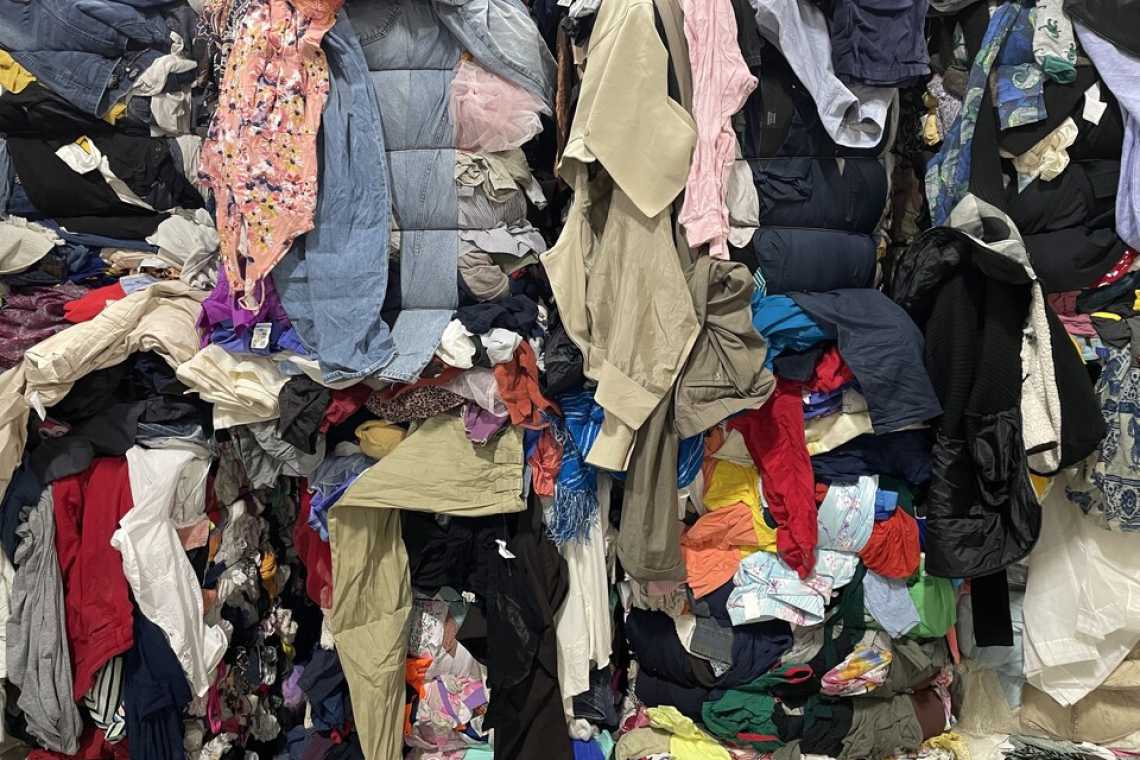
For years, the vibrant colors and bustling trade of Kantamanto Market—the world’s largest secondhand clothing hub—have masked a silent health crisis. Today, the reality is surfacing:
the millions of garments arriving from the Global North are not just fabric; they are a source of hazardous microfiber pollution that is lodging itself in the lungs, blood, and even the breast milk of Ghanaian traders.
The story of Linda and Ruth, two veteran traders who abandoned their stalls after a decade of work, serves as a canary in the coal mine for a value chain that employs thousands but protects almost no one.
1. The Science of the "Shed": Microplastics in the Air
When bales of secondhand clothing (largely made of synthetic materials like polyester and nylon) are opened, shaken, and cut, they release microscopic plastic fibers into the air.
The Preliminary Findings (The Or Foundation):
-
Widespread Contamination: Microfibers have been detected in the spit, urine, feces, and breast milk of market workers.
-
Respiratory Distress: Testing revealed restricted lung function, persistent wheezing, and coughing.
-
Ocular Damage: 80% of workers reported chronic eye irritation or difficulty reading.
-
Ingestion Risks: The presence of fibers in fecal matter suggests ingestion, leading to bowel irritation and potential long-term risks of cancer.
2. Air Quality: "Very Polluted"
A portable sensor (Atmotub) test conducted by the GNA over seven Saturdays consistently ranked Kantamanto’s air at the second-highest danger level.
"Microfibers are largely chemical in nature. When they are seen in secretions, it means the work environment has become hazardous." — Dr. Louisa Ademki Matey, Accra Metropolitan Assembly
3. The "Volumes Over Value" Crisis
Ghana became the world’s largest importer of used clothing in 2021 ($214 million worth), but the quality of these imports is declining due to "Fast Fashion." * Synthetic Dominance: Unlike cotton, polyester is cheap and unlimited, but it sheds microplastics that do not biodegrade.
-
Waste Explosion: The waste collected from Kantamanto has increased fourfold, overwhelming Accra's landfills.
-
Global North Outlet: Wealthy nations use the secondhand trade as a dumping ground to avoid managing their own textile waste.
4. Policy Reset: The Extended Producer Responsibility (EPR) Law
The Ghanaian government is currently drafting the Extended Producer Responsibility Law to shift the financial burden of waste management from the state to the companies that profit from these products.
-
The Mandate: Importers and producers of electronics, plastics, and secondhand goods must pay into a fund for safe collection and disposal.
-
Status: A first draft, developed with the World Bank, is expected to reach Parliament by the end of 2026.
-
Circular Economy: The Ghana Garment and Textiles Roadmap aims to transition the industry toward repair and upcycling, rather than dumping.
5. Survival and Retraining
For those like Linda and Ruth, leaving the market was a matter of life and death. Supported by The Or Foundation, some traders are being retrained to work with safer materials like cotton to produce tote bags and yarns.
However, for the thousands remaining, experts urge immediate safety protocols:
-
Protective Gear: Consistent use of N95 nose masks, goggles, and gloves.
-
Ventilation: Improving airflow in the cramped corridors of the market.
-
Regular Screening: Annual lung function and eye examinations.
The Bottom Line
Kantamanto is the backbone of many Ghanaian livelihoods, but at its current scale, it is an environmental and biological time bomb. As the 2026 "Reset" takes hold, the focus must shift from simply managing the volume of clothes to protecting the value of human life.